Sunday, January 23, 2011

Traveling in Zavhan

Five of us, - my colleague Oyungerel, the aimag tourism officer, representative from Greengold a pasture management project funded by Swiss Development Company and our driver- spent two days visiting herder projects in the aimag. Traveling in the winter in Mongolia is amazing. From Uliatsu, the capital of Zavhan, we drove to Erdenekhairkhan  where we stayed the night, we then drove onto some amazing sand dunes covered in snow before heading to Doruljin and then back to Uliatsu. Zavhan is not on the main tourism trail and traditional customs survive uncorrupted by exposure to international travelers. When hungry or thirsty we drove upto a ger, asked that the dogs were safe, and were invited in for tea, and fed buzz or meat, all for no payment. Should we encourage tourism in these places?


Relaxing in the hotel in Erdenekhairkhan

Steaming Buuz


Monastery at Erdenekhairkhan


These icons are made from animal fat
Monastery at Erdenekhairkhan


Relaxing at minus 20C


Erdenekhairkhan

Collecting water, usually water is collected in trolleys, a friend suggested that this reflects the strong Chinese influence in Zavhan, there was a large Chinese settlement at Uliastu in Manchu times.


At Doruuljin soum a mining company surveying gold deposits has provided this bank of solar panels which provides electricity to the population for five hours a day from 7pm to midnight. Two sons of our hosts were working for the mining company which employs about 60 local peoiple. They hopw that the mine will be developed as there are few opportunities in the soum.


A rangeland management meeting in Doriljin
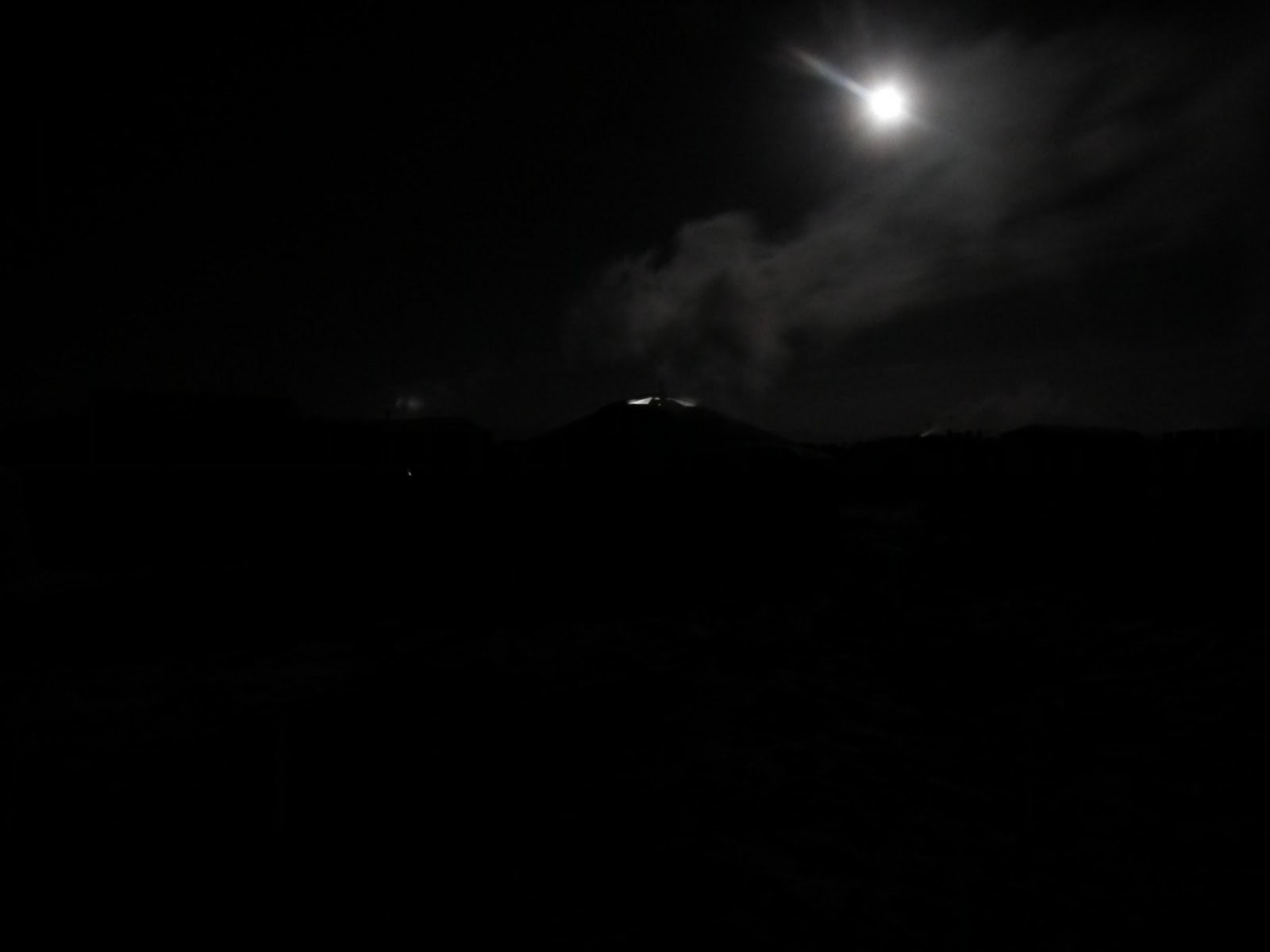

It was minus 41C at night but the ger was warm


Community tree planting

J and his wife from Community group were pleased to show us the meadows outside Uliatsu where they had harvested  wagons of hay and planted trees. As the sun set we drank vodka, 2 black vultures drifted overhead, a goldeneye and a dipper ( a Mongolian tick) flew along the stream kept open by water from hot springs. The conversation turned to lack of support from regional government and undue influence of powerful landowners.


Friday, January 21, 2011

A bad day for wolves


Saturday was a bad day for wolves: as we drove into Uliastai we passed one strapped to the front of a land cruiser, then later when I was walking in town a jeep drove by with one strapped to the bonnet. Mongolians have always hunted wolves, and for the herders of the 30 million livestock the wolf is a respected adversary in the struggle for a livelihood. Now the balance has been changed by land cruisers, spotlights, powerful rifles and an urban elite. Wolves are still widespread and not protected, not even in protected areas and the hunting pressure is immense. A World Bank funded study in 2006 estimated 20-30000 wolves were killed in 2004 out of a total population of between 50 and 100 000.  I showed these pictures in the workshop the next day and we discussed wolves . “Hunting was necessary but if there were no wolves there would be no animals. They were surprised that they were almost extinct in western Europe and farmers paid not to shoot them”. Later I asked my colleague Oyungerel about the use of wolves in traditional medicine, - the stomachs are used to cure stomach problems, and ankle bones are worn by guys to increase their strength and luck.Apparently it is especially lucky to kill or even see a wolf in January. So Saturday was probably not an exceptionally bad day for wolves.


Friday, January 7, 2011

New Year


The New Year in Mongolia is a time for parties. Christmas is not celebrated. The trees which have appeared in main squares are for the new year.


Office parties are more formal than in england and usually include singing and musicians, lots of good food, presentations and presents to staff and dancing.


Sunday, October 31, 2010

Moust soum


We travelled to Moust to visit herder community groups who had started to receive tourists and wanted advice. Moust is in the Altai Sayan, a great undeveloped mountain region straddling borders of Russia, Mongolia, Kazakhstan and China, recognised by WWF as one of great unspoilt eco regions of asia, and currently supported by a UNDP project. This is home to snow leopards, argali sheep and wild goats, a bleak semi desert mountain range with permanent snow fields on summits, a stunning place. We visited herders, talked about tourists, played games, drank tea, and took photos of each other whilst lammergeirs and black vultures glided overhead. I want to go back in the summer.


Saturday, October 30, 2010

Moust soum in Hovd aimag is one of the more isolated locations in Mongolia, a 6 hour drive from Hovd city, which in turn is 1100 kilometres or 3 hr flight from UB. We arrived in the soum in the evening, and Cameron and i wanted some exercise after 7 hours bouncing about in a Russian jeep so we scrambled up the local hill. 


For some reason it is a common practice to place concrete statues of argali on the hilltops, maybe to fool lazy tourists.

Looking down on the other side we saw a small monastery, so we scrambled down, past flurries of snowfinches.

The monastery seemed deserted and the kennel was empty so we went in the compound.


 As I was spinning the prayer wheels a giant dog appeared from nowhere a couple of feet from me barking and growling, fortunately the gods had appreciated my spinning and the lama appeared from the ger, restrained the dog and said welcome, sorry about that in perfect English, albeit with an American accent. Sansarbatr had previously been assistant to the head llama at main monastery in UB, had spent a year in London, and retreated to this monastery for a life of meditation and ritual. In the summer he moves his ger into the hills. He seemed content.


The monastery had been built a few years ago by local who had become a government minister and was beautifully built timber. We returned the next day with our colleagues and he showed us the copies of rare Tibetan Buddhist texts
 and gave us two blessings, - one for purification, the other for longevity and prosperity


.

Tuesday, October 12, 2010

When Baljinnyam met and Dashnyam

Sunday was an auspicious day in the Tibetan/Mongolian Buddhist calendar, its is the day when gods Baljinnyam and Dashnyam meet,  -  for an explanation  of the Buddhist mythology look here , - and many couples decide to get married on such auspicious dates. I was invited to two wedding dinners, both were joyful occasions.The food was delicious, and there were singers and musicians. Look out for the Mongolian musicians on the new BBC series Human Planet /Music Planet, they played at Jan's wedding and were great and will be performing in London in November.

I have settled back in Ulaanbaatar. My flat is in a great location in the centre of town and in the same block as my favourite vegetarian restaurant. Which is fine, except when it was closed 'cos Richard Gere was expected.


There is a small park in the front and when i arrived bleary eyed  and jet lagged I was surprised to see flowers in bloom, closer inspection they were plastic


In communist times it was one of the most prestigious buildings, located next to government building, now it is dwarfed by skyscrapers and the prestige locations are in modern blocks, or out of town on the edge of the forest.


After 10 months away I have noted a few changes. The increasing money from mining development is apparent. The Louis Vuitton shop has been joined by Armani, and I even saw a Lamborghini in the street, Mongolia must be one of most unsuitable countrries for such a low slung car. The increased affluence also shows in many hundreds of trees which have been planted around town during the last year.


However the affluence also highlights the inequalities. A friend who works as a social worker in the countryside outside Ulaanbaatar is trying to raise money for a kindergaarten where there is no furniture or toys for the children.

My work is going well, I am based with a Mongolian NGO, the Sustainable Tourism Development Centre. At present I am working on two projects, a continuation of my work with Mercy Corps supporting rural communities develop tourism, and a Dutch funded programme helping Mongolian tour companies develop European markets.

I am also finding time to do research for my PhD.

So far I have had little opportunity to do any birding, but hopefully that will change as I have trips scheduled to the countryside later this month.