Sunday, July 31, 2011

Altai Sayan

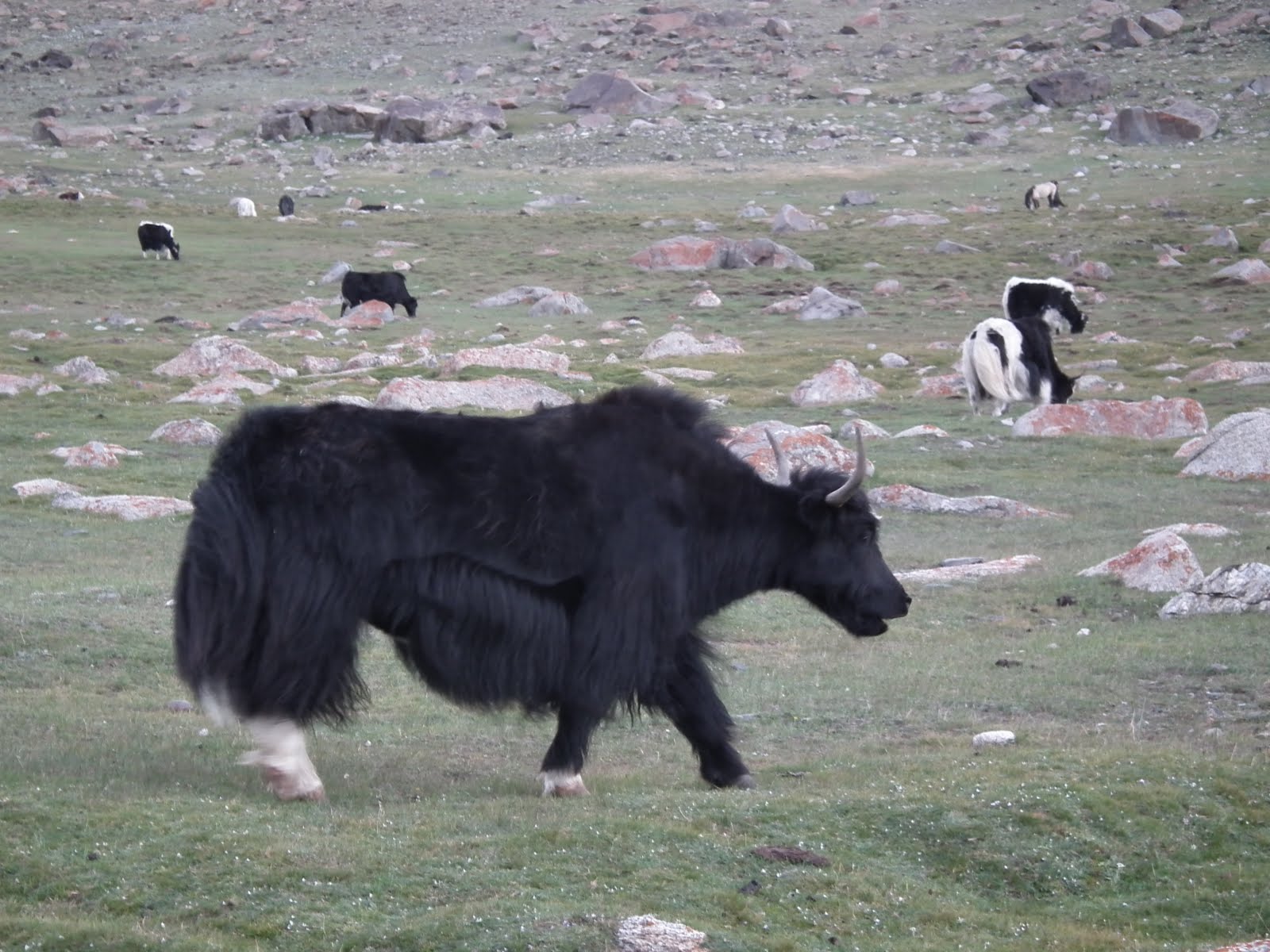
The Altai Sayan mountains extend across the borders of Russia, Kazakhstan and Mongolia and are identified by wwf as one of great wilderness in world. The UNDP have for seven years been working with herder communities to promote conservation and improve herder livelihoods. We travelled high into the summer pastures at 3000 metres to interview herders who were working with tourists, to talk about their experiences hopes and needs.


A day at the races

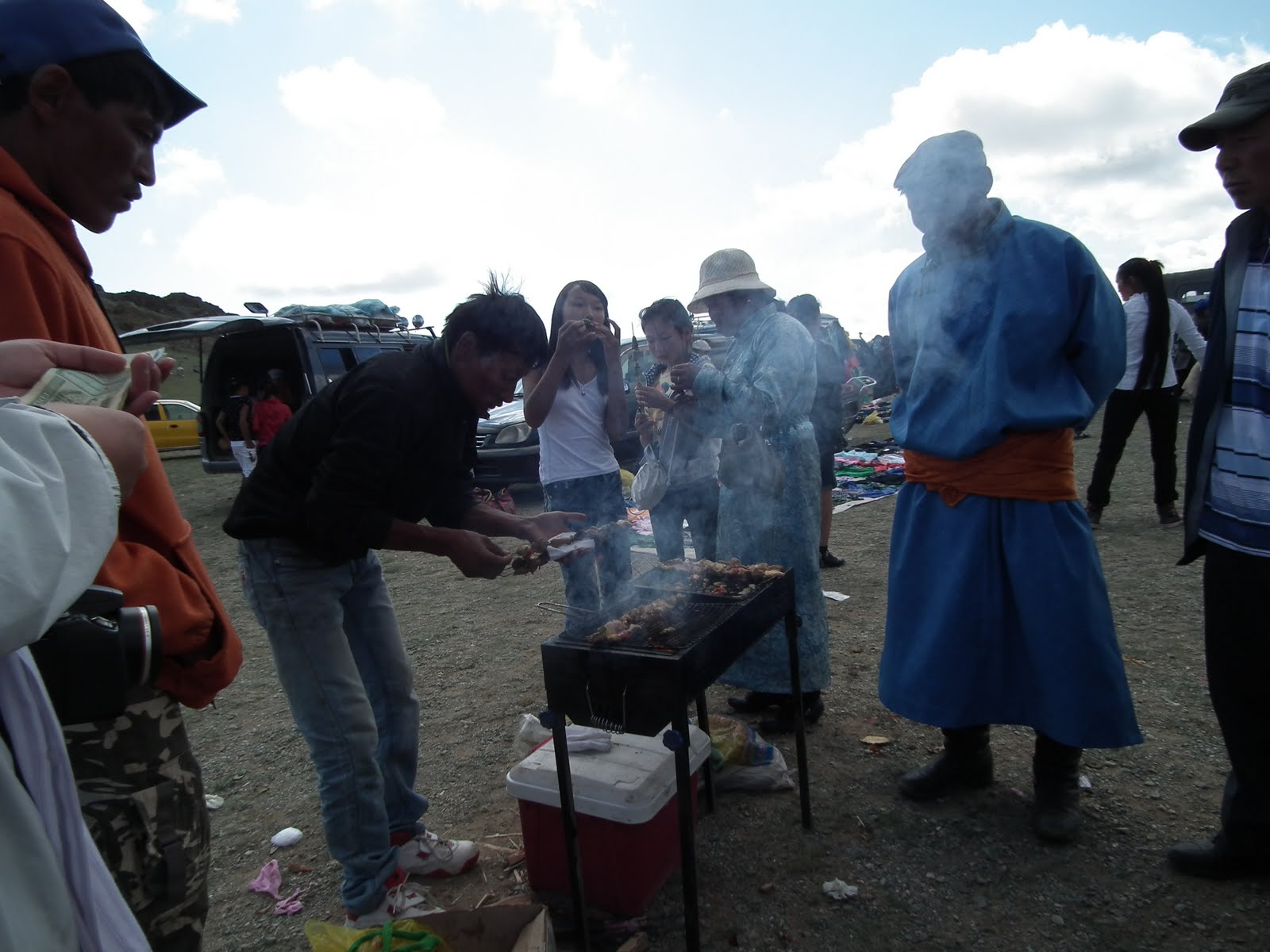
Every town (aimag) and village (soum) holds a local Naadam in July or August. Most soum in Hovd aimag is celebrating its 80th anniversary this year and I was invited to attend by one of the communities I had worked with in the autumn, so Oyungerel and I timed our research visit to coincide. Because it was an anniversary the prize money was high, as much as a motorbike or car for the winner of wrestling or horse-race and many former residents returned, so the usually quiet village was transformed.


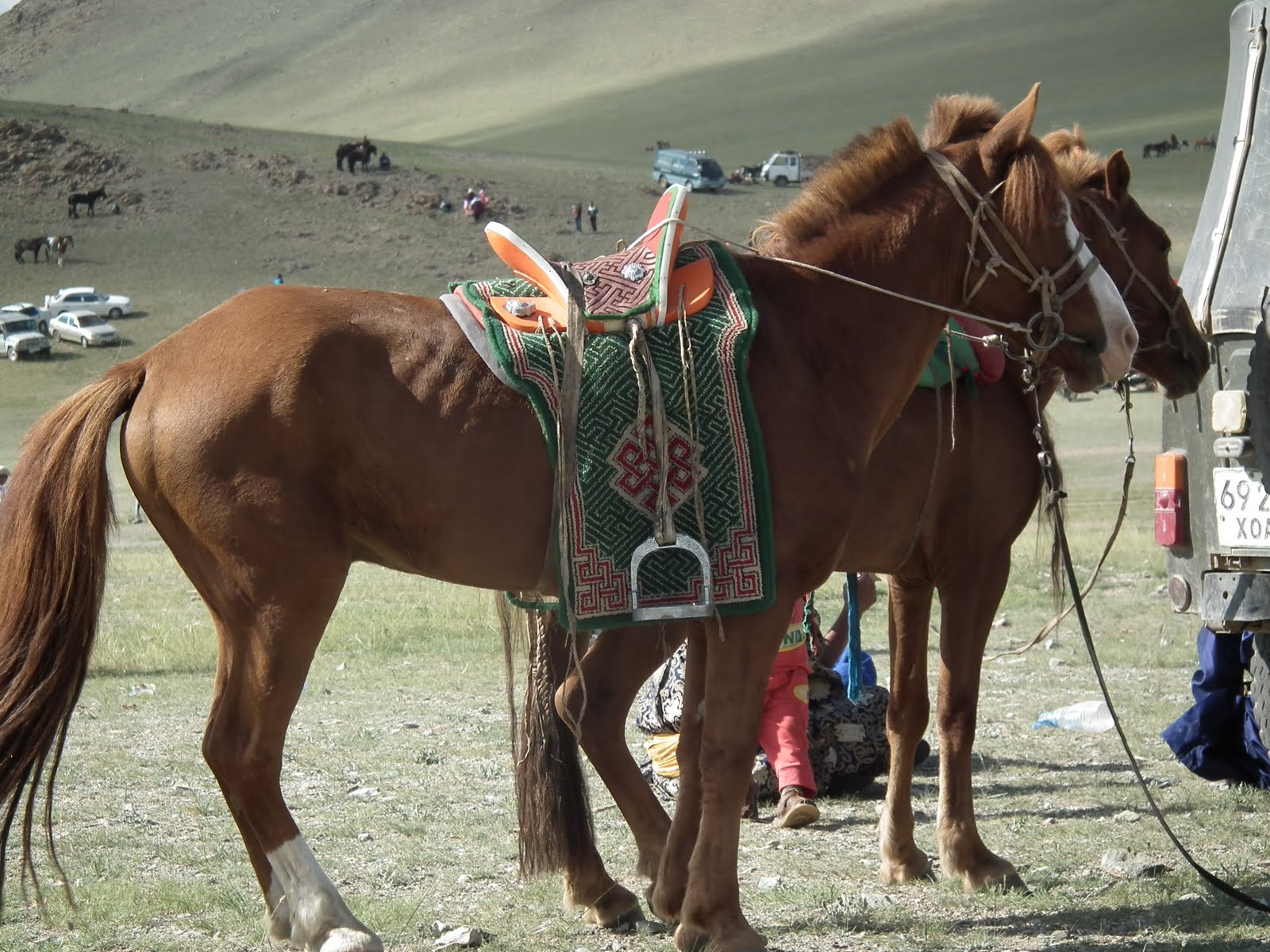
There are many cultural beliefs associated with Naadam, there is a crazy dash at the end of the race for yearlings as Mongolians try to touch the winning horse, the belief is they will gain strength and speed from the sweat, Munkdologor emerged from the melee with half a dozen hairs from the horse’s tail which she distributed to my party who carefully put the hair in a safe place. It is beneficial to have your picture taken with a strong horse, maybe I will gain strength for the gobi marathon in September.


Wednesday, July 20, 2011

Summer in the city.

Life moves outside in the summer, even in Ulaanbaatar and there are bars on pavements and outside buildings. I have spent the last month in UB, tomorrow I head out to west Mongolia, - Hovd and Uvs. Meanwhile some pictures of city life.

In June Mongolia won their first ever game in the World Cup, beating Myanmar 1 - 0; unfortunately they lost the return leg 2 - 0.


The week after the football there was a folk festival in UB when musicians from all over Mongolia travelled to perform in UB. It was absolutely brilliant, there are video clips herehttp://www.facebook.com/brianrwat


Then last week was Naadam, the mongolian National holiday, for the first time I went to the opening ceremony.


and on the third day of Naadam it was national costume day.

I managed one notable trip to the countryside to see three siberian cranes, for pictures go to http://birdsmongolia.blogspot.com/

Friday, June 17, 2011

Uglugch Wall

```````````Uglugch Wall, or Almsgivers Wall as translated, was one of those places which caught me by surprise and delighted me. My first impression from across the marshy valley was of a small wall and earth embankment, not dissimilar to the iron age walls in Britain. The next day I crossed the marsh and started following the wall up the increasingly steep hillside. As I climbed the wall was less damaged and more than 4 metres tall. The hill got steeper and walking hard work. Why had someone gone to all the effort maybe 1300 years ago to build this wall? Then, at the top I realised why, - there were commanding views over three valleys, this must have been a strategically important location.

But who built the wall and why? The guidebooks and Google are not very helpful and suggest an 8th  or 9th century origin. Today there are just a few nomadic families living in the area, - when the wall was built there must have been hundreds or thousands of people living here. Just walking alongside the wall was hard work for me, never mind building a stone wall nearly 5 metres tall.


I was staying at a tourist camp owned by my friend Gala – Ugluch Wall Eco Lodge- located on a wooded hill side in north east Mongolia, - Gala has built the lodges himself from local timber and wants to develop it as an eco friendly destination. The camp is located at the top of a col on the edge of the forest steppe.


It was not the best of times for me to visit as Gala was busy preparing for the tourist season but I was happy to walk in the woods and valleys, birding, sitting in the shade and reading a book and relaxing. Even in early June birds were still migrating north and birds present one day had moved on the next. I enjoyed watching birds slowly, not a frenetic dash to see the next species.


The forest steppe is changing. Herders are abandoning the small mountain valleys but remaining in steppe valleys where the pasture is better, so the flowers are blooming and shrubs growing in valleys. 


However the large herbivores mousse and red deer are hunted and numbers declined so vegetation grows unchecked. The other dramatic feature of the forests are fires. Fires are natural part of taiga ecology but their frequency has increased over years, either because of human influence or global warming.


On the steppe the landscape is changing as well, Gala described how a marsh area with at least two pairs of white naped cranes was a large lake in his childhood. Throughout Mongolia rivers and lakes are drying up, again global warming but probably not helped by water extraction for mining.


I travelled back to UB in a local mini bus, the 200 kilometre journey took 12 hours as we stopped at meat market to unload animal skins and a large bull’s head which had been traveling with us. It was a contrast to my usual travel in a development worker's land cruiser with English speaking colleagues; in UB life can be in a sheltered bubble with good restaurants and talk of investment and mining a country changing rapidly, and this contrasts with life in a ger in countryside..

Thursday, May 5, 2011

Go east

Choibalsan the capital of Dornod aimag looks like a Russian city with apartment blocks, murals and monuments.


However recent statues reflect a Mongolian identity. According to a Buriat legend birds were involved in creation and this statue shows woman emerging from a swan. Buriat are a distinct ethnic group in Russia and northern Mongolia.


Borte was Chinggis Khan's wife and born in Dornod aimag, fed up with her sons quarreling she gave each of them an arrow and asked them to break it with their hands which they did easily, she then took five arrows together and asked them to break them, but they could not. If you are united you are strong, separate you are weak.

I was in Choibalsan for a tourism conference organised by regional government. The aimag government is committed to developing cross-border tourism with Russian and Chinese neighbours and the Ministry is supporting this with proposals to build two tourism complexes. At first glance this makes sense, Dornod is far from UB and other international tourists. However development of cross-border tourism requires a change in policy from the Border Agency which does not wish to increase the number of border crossings. Everywhere in Dornod there was evidence of Chinese investment: Chinese mining companies drilling for oil, a Chinese funded irrigation scheme ploughing large areas of virgin lands for wheat, a Mongolian/Chinese tourist camp.

After the conference I traveled to the eastern border with Batbold, Head of protected areas, Gansorlig Tourism Official. and Baljimaa my interpreter. This trip was entirely arranged and funded by the aimag government so we did not have the regulations of international organisations like Mercy Corps. We had our first vodka at 8 am less than 10 minutes after leaving town, every meeting was accompanied by vodka, and at every departure there was more vodka on the edge of town. I stayed sober, politely sipping the drink rather than emptying the glass as encouraged by Batbold. Not surprsingly Batbold and Gansorlig ended the day pretty drunk but they were generally good company.


Dornod has the largest area of natural grassland in the world with an estimated two million gazelle and is described by conservationists as one of the last great wildernesses in the world, the locals seem surprised by this description.Gazelles are fine but tourism potential is limited, a bit like watching cows graze, and the landscape is very flat, fine if you like grass.


At Ikh Burkhant there is a large Buddha monument lying on the hillside, it was built by a local Khan in 1864v so that local Mongolians would not have to make a pilgrimage to Tibet.


Khalkgol was the site for Mongolian Russian defeat of Japanese army in 1939. The Mongolians take great pride in this victory, they were the only Asian country to defeat the Japanese. There are numerous monuments in the countryside and a museum in Khalkgol soum.


In communist times Khalgol soum was an important border town with flights from Russia however much of the Russian investment stopped in 1990 and now parts of the town are derelict. It reminded me of some of the small towns in Kazakhstan.


We then travelled east to Nomrog protected area, this was an uninhabited landscape of grassy plateaus, rolling hill sides and marshy valleys. There are no herders here but we stayed at Military border police. 


 Even in this remote area there was evidence of Chinese investment.


I had little time for birding but managed a few pictures of local wildlife. An account of birds on my recent trip to Gobi is on birds mongolia website. I was also pleased to see Asian Greenfinch which was a new species for me.